
Imagine the following scenario: A vehicle from your production line is involved in a serious accident. The steering column has failed. People are injured. The recall runs into the millions - and then comes the expert's decisive question: "Did you work in line with the state of the art?"
Your answer is "Yes." But then comes the follow-up: "And how can you prove that?"
This is exactly where, in the event of damage, the line is drawn between liability risk and liability protection. If you cannot answer that question, even the highest quality standards will not help you. Under German product liability law, there is a rule many production managers are unaware of - and it can become very expensive: the burden of proof lies with the manufacturer. In practice, that product liability burden of proof is often decided by how well you manage documentation requirements in everyday production.
Note: No legal advice - This article provides general technical and legal guidance. It does not replace specialized legal counsel. For specific liability questions regarding your production processes, please contact a specialized attorney.
What "state of the art" means in law - and why the distinction is critical
The term "state of the art" sounds like technical jargon. Legally, however, it is precisely defined - with very concrete implications for product liability. In its Kalkar decision[1], the Federal Constitutional Court established a three-level model that still underpins product liability questions today:
| Criterion | Generally accepted engineering practice | State of the art | State of science and technology |
|---|---|---|---|
| Definition | Proven, field-tested methods - majority opinion of practitioners | Advanced development status that ensures the protective purpose | Scientifically established leading-edge state of the art - not necessarily proven at industrial scale |
| Requirement level | Minimum level ✅ | Medium / required level ⚡ | Highest level 🔬 |
| Example screw technique | Experience: correctly tightening with a torque wrench | Electronic tools with automatic documentation according to VDI/VDE 2862 | Research prototypes with AI-assisted connection analysis |
| Relevance in the event of damage | Courts deem falling short of the standard as negligence | Documentation protects against liability for A-class fastenings | Only required in high-risk areas (nuclear technology, medicine) |
| Burden of proof | Yes - in case of injury, damages may be awarded | Yes - documentation, calibration, PFU mandatory | Yes - rarely relevant for serial production |
For screw assembly in series production, the "state of the art" (level 2) is the decisive benchmark. It is not determined by common practice on the shop floor, but by what is regarded at the forefront of technological progress as suitable, necessary, or appropriate - in other words, technically and economically feasible progress.
For tightening technology this means, concretely: VDI/VDE 2862 is regarded among experts as the recognized state of the art for classification, documentation, monitoring, torque control and assembly process stability of screw joints. It defines which tools, processes, and proofs are required for safety-critical joints. Anyone who can demonstrably work in accordance with VDI/VDE 2862 is in a significantly stronger legal position in the event of damage. Anyone who does not is faced with an evidentiary gap that is very hard to close.
For a comprehensive overview of the three screw joint categories A, B, and C and their concrete requirements for tools, MFU and PFU, see our fundamentals article VDI/VDE 2862 made simple.
The Product Liability Act in practice: Three points you must know
1. Strict liability - you are liable even without fault
If a defective product is manufactured that kills or injures a person, the manufacturer is liable and must compensate the injured party - regardless of whether the manufacturer was at fault. The manufacturer is liable even if neither intent nor negligence can be proven. This so-called strict liability (Gefährdungshaftung) is the core of the Product Liability Act (ProdHaftG).
Product liability cases are usually associated with very high costs. In the case of personal injury, companies in Germany are liable for up to 85 million euros. On top of this come reputational damages, which are hardly quantifiable.
2. Reversal of the burden of proof - you must prove your innocence
The manufacturer can only free itself from this strict liability if it proves the exonerating circumstances provided for by law. It must present all the facts that exclude its liability.
That may sound abstract, but it has a very concrete consequence: if, in the event of damage, you cannot produce complete, gapless documentation of your screw processes, you have no basis on which to prove that the work was carried out correctly. Handwritten records, missing tool IDs, or expired calibration certificates become serious risk factors in court and can undermine your audit documentation.
3. Personal liability - not only the company is liable
The Product Liability Act primarily applies to companies. Alongside it, however, there is tort-based producer liability under Section 823 of the German Civil Code (BGB). Civil liability of an employee requires, first, that an obligation has been breached and, second, that there was negligence - i.e. a failure to exercise the care required in the circumstances.
In cases of so-called organizational fault - where those responsible have not eliminated known process risks - personal liability may arise for managing directors and production managers. "I did not make that decision" is no defense if you were responsible for the process and neither reported nor remedied obvious deficiencies.
The burden of proof lies with the manufacturer - In the event of a claim, you as the manufacturer or supplier must prove that you have performed the work correctly. It is not the injured party who must prove your fault - you must document your proper working practices. Without flawless documentation, this proof is almost impossible.
What courts and auditors consider to be the "state of the art"
When an expert assesses whether your process met the state of the art, they examine a concrete checklist which directly relates to assembly quality assurance and production traceability:
1. Standards-compliant tools Were electronic, measuring tools used for A-class joints, recording every tightening operation automatically with precise torque control and angle measurement? Or were mechanical torque wrenches used that cannot provide individual-value documentation?
2. Complete traceability For every single joint, can you trace: which tool, which operator, what torque value, what angle of rotation, what timestamp, which part number? Careful design combined with documented monitoring of production and products is essential.
3. Valid calibration certificates Were all tools used in assembly covered by a valid calibration certificate at the time of tightening? To keep liability risk low, the manufacturer must stay informed about developments in what is technically feasible. If safe, deployable solutions are available, the manufacturer is obliged to implement them - only then can liability risks be sufficiently limited.
4. Process capability evidence (MFU / PFU) Are machine capability studies (MFU) and process capability studies (PFU) available for the critical screw joints - and are they regularly repeated? VDI/VDE 2862 typically requires process capability indices of Cpk/Cmk ≥ 1.67 for A-class joints. This is a key proof of assembly process stability and reliable screw assembly quality.
5. NOK detection and blocking Are there automatic processes in place that detect faulty joints and prevent defective parts from leaving the assembly station?
How your auditor systematically reviews these points - and what is often missing - is outlined in our Audit checklist for screw processes: 10 check points.
Your personal liability risk check
Before we look at the typical liability traps: how is your process currently set up? The following interactive check gives you an initial assessment of your risk profile in just five minutes:
Five common liability pitfalls in screw assembly
Pitfall 1: Mechanical tools for A-class joints
A mechanical torque wrench indicates when the target value has been reached - but it does not document anything. In the event of damage, there is no proof that the correct torque was actually applied. There is certainly no proof of the angle of rotation, which is crucial for assessing the clamp length.
Pitfall 2: Missing or incomplete documentation
Paper protocols are filled out by hand - often afterwards, with corrections, gaps, and without timestamps. For auditors and courts, such records carry little weight. Even clarifying the facts can generate high costs if the manufacturer has to recreate and supply evidence. The company must prove that it acted properly and complied with all laws and rules, which is only possible with robust, digital documentation requirements embedded in daily operations.
Pitfall 3: Expired calibration certificates
According to VDI/VDE 2862, tightening tools used in category A applications must be calibrated and checked for machine capability at regular intervals. An expired calibration certificate not only signals a technical risk - it also clearly signals to the expert that process controls have failed. For a DAkkS accredited calibration lab or DAkkS calibration laboratory, such gaps in the calibration history are an immediate red flag.
Pitfall 4: No process capability evidence
MFU and PFU are not bureaucratic overhead - they are the evidence that your process delivers correct results statistically reliably. If that evidence is missing, you cannot show in the event of damage whether the error was a one-off or a systemic process failure.
Pitfall 5: "We've always done it this way"
This is the weakest defense in court. What matters is the extent to which the state of scientific and technical knowledge at the time the product was placed on the market was observed - in other words, whether you were working to the state of the art. Compliance with technical standards is regarded as strong evidence that the duty to ensure safety in traffic and use has been fulfilled. Anyone relying on custom and habit but unable to demonstrate compliance with standards risks full exposure to product liability.
GWK tools as a safeguard for the "state of the art"
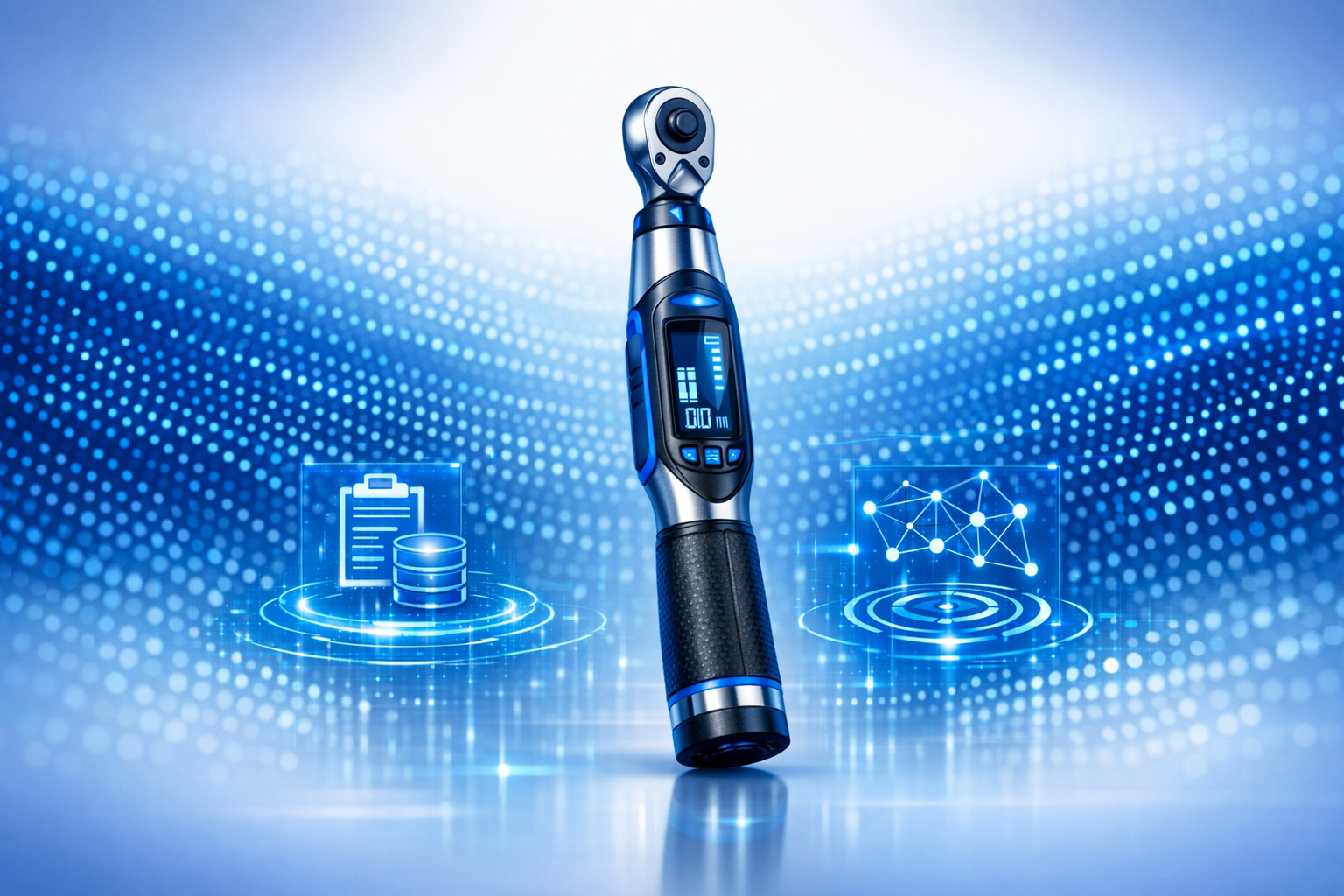
In practice, the state-of-the-art requirements for A-class screw joints can only be met with tools that combine three properties: precision, automatic documentation, and complete traceability. GWK offers a complete system solution for this - Accuracy by GWK - built around a modular tool system that supports consistent production traceability and high screw assembly quality.
OPERATOR® - automatic documentation directly in the production process
The OPERATOR® production tool is designed so that documentation does not happen alongside the work, but during the work. Every tightening operation is automatically recorded: torque value, angle of rotation, timestamp, tool ID, and - with an optional barcode scanner* - also the part number and operator. WLAN data transmission sends all results in real time to higher-level quality systems. Open Protocol and PLC interfaces enable seamless integration into existing production environments.
The modular interchangeable square-drive system of the OPERATOR® allows maximum flexibility with minimal service costs - a crucial factor for economically viable, standards-compliant series production and robust assembly quality assurance.
QUANTEC MCS® - process capability evidence with reference-free angle measurement
For producing PFU evidence, the QUANTEC MCS® analysis tool is the instrument of choice. Its characteristic reference-free angle measurement makes it possible to analyze tightening curves under real conditions without needing a fixed point on the part or in the surroundings. With a measurement accuracy of ±1% between 10 and 100% of the nominal range, QUANTEC MCS® delivers the data quality required for reliable process capability assessments in line with VDI/VDE 2645.
Compatibility with QuanLabPro, Ceus, and QS-Torque software turns the system into a complete analysis ecosystem - from individual measurements through to statistical process evaluation. For manufacturers, this is a key building block for stable tightening processes and clear PFU reports that stand up in any audit documentation.
How MFU and PFU work together - and why a good Cmk value alone is not enough - is explained in our article MFU vs. PFU: Why machine capability alone says nothing about your screw process.
DAkkS-accredited calibration laboratory - calibration at the highest level
Proof of tool accuracy starts with traceable calibration. The GWK DAkkS-accredited calibration laboratory, equipped with the DWPM 1000c calibration bench, operates at class 0.2 measurement accuracy - the highest available standard for torque calibration. Alongside stationary calibration, GWK also offers mobile on-site calibration services that minimize downtime and ensure a complete, uninterrupted calibration history. This is a central pillar of production traceability and directly reduces product liability risk.
Conclusion: The "state of the art" is your legal protection - not a nice-to-have
In screw assembly, liability law is not an abstract risk. It is a concrete, quantifiable factor - and it is manageable if the right tools and processes are in place.
The key insight: working in line with standards only provides liability protection if it is also provable. A company that works reliably but cannot produce documentation is, in the event of damage, in the same position as one that has actually made mistakes.
Electronic tightening tools with automatic data capture, regular DAkkS-calibrated checks in a DAkkS accredited calibration lab, and documented PFU evidence are not investments in bureaucracy - they are investments in legal security, for the company and for you personally, in a regulatory environment where product liability and the product liability burden of proof are becoming ever more demanding.
Frequently Asked Questions (FAQ)
Does the 'state of the art' also apply to Tier-1 suppliers or only to end-product manufacturers?
Yes, it applies to the entire supply chain. The ProdHaftG defines 'Manufacturer' to include the manufacturer of a subassembly that is incorporated into another product. Tier-1 suppliers that manufacture safety-critical assemblies therefore bear the same responsibility as the OEM.
Is regular DAkkS calibration sufficient as evidence?
Calibration is necessary but not sufficient. Courts and auditors also check: process capability proofs (MFU/PFU), complete fastening data records, the proof that tools comply with standards, and a documented response to nonconformity findings. Calibration alone only proves tool accuracy — not process quality.
Can I, as a production manager, be personally liable?
Yes. In addition to fault-free corporate liability under ProdHaftG, personal liability under § 823 BGB can arise in cases of organizational fault. This applies to individuals responsible for quality assurance who have demonstrably failed to eliminate known risks.
What happens if I continue to use mechanical torque wrenches for an A-class tightening?
Mechanical torque wrenches do not capture individual values, do not enable seamless documentation, and do not provide process capability proofs. In the event of damage, proving compliant work according to VDI/VDE 2862 Category A is therefore effectively impossible — the liability risk is very high.
How long must fastening data be retained?
There is no uniform statutory deadline, but under ProdHaftG liability expires only 10 years after the product is brought to market. Automotive standards (IATF 16949) typically require 15 years of retention for safety-critical documentation. The data should be securely archived for at least this period.
Note: No legal advice - This article provides general technical and legal guidance. It does not replace specialized legal counsel. For specific liability questions regarding your production processes, please contact a specialized attorney.
* Barcode scanner = optional accessory