
Imagine this: A steering column bolt was tightened correctly in the plant - but no one can prove it. No measurement. No timestamp. No log. Three years later, the joint fails on the highway. There's an accident. The public prosecutor starts investigating - and looks for whoever was responsible in production.
This is not a far-fetched worst case. It is the logical consequence when safety critical joints are assembled without documentation that complies with current standards.
Class A bolted joints are not a bureaucratic label. They are joints whose failure puts human life at risk. Anyone assembling them without the right torque tools and without complete production traceability is not only acting negligently from a technical point of view - they are also exposing themselves and their company to significant product liability risk.
This article explains what defines a Class A bolted joint, what VDI/VDE 2862 requires, how the Product Liability Act affects your screwdriving process - and why electronic tools with automatic torque monitoring and audit documentation are no longer optional, but mandatory.
What Is a Class A Bolted Joint? The VDI/VDE 2862 Definition
Fastening cases in Category A pose a risk to life, limb and the environment if they fail. That is the concise definition in VDI/VDE 2862 - short, but with far-reaching implications for every assembly operation.
The classification into Categories A, B and C is based on the risk associated with failure and on how easily assembly errors in the bolted joint can be detected and prevented.
Concretely, a joint is classified as Category A (safety-critical) if
- its failure can directly lead to injury, death or environmental damage, and
- an incorrect tightening operation cannot be reliably detected during or after assembly.
Real-World Examples of Class A Bolted Joints
Abstract definitions are one thing - specific use cases make the stakes much clearer:
- Automotive: Steering column bolts, brake caliper bolts, wheel hub connections, seatbelt anchorages, airbag initiator brackets
- Aerospace: Structural bolts in load-bearing connections, engine mount fasteners, landing gear components
- Rail transport: Bogie connections, brake system bolts, coupler suspensions
- Mechanical engineering: Safety-related bolted joints on presses, lifting devices and pressure-retaining vessels
For all of these bolted joints, the rule is simple: if the bolt fails, personal injury is not a rare exception - it is a foreseeable outcome.
How Class A Differs from Categories B and C
Fastening cases in Category B involve the risk of functional failure - the classic "breakdown by the roadside". Category C covers all joints that are neither Class A nor Class B. Common shorthand is "safety-critical" for Class A, "function-critical" for Class B and "non-critical" for Class C.
The consequences of this classification for torque tools, documentation requirements and process capability are substantial - as the following overview shows:
| Requirement | Category A (safety-critical) | Category B (functional-critical) | Category C (non-critical) |
|---|---|---|---|
| Risk of Failure | ⚠️ Life and limb / Environment | 🔧 Functional failure ("Liegenbleiber") | 😐 Nuisance, no damage |
| Tool type | Electronic, measuring, with shutdown function | Electronic, measuring | Controlled or simple |
| Control and monitoring variable | Directly measured, both quantities mandatory | At least one directly or indirectly measured | At least one control variable |
| 100 % Documentation | ✅ Required - every individual fastener | ⚠️ Recommended / OEM-dependent mandatory | ❌ Not strictly required |
| Automatic fault shutdown (N.i.O.) | ✅ Mandatory - interlock signal on faulty fastening | ✅ Recommended | ❌ Not required |
| Part identification / Traceability | ✅ Required | ⚠️ Recommended | ❌ Not required |
| Machine capability (MFU) | ✅ Mandatory (Cmk ≥ 1,67 recommended) | ✅ Mandatory (Cmk ≥ 1,33) | ⚠️ Recommended |
| Process capability (PFU) | ✅ Mandatory (Cpk ≥ 1,67 recommended) | ✅ Mandatory (Cpk ≥ 1,33) | ❌ Not mandatory |
| Typical examples | Steering column, brake caliper, seat belt attachments, structural bolts (aerospace) | Gearbox cover, engine mounting components | Trim strips, cladding parts |
Are Your Bolted Joints Classified Correctly?
Use the following interactive tool to classify your bolted joints step by step in line with VDI/VDE 2862:
For a full explanation of the logic behind the classification and the requirements for all three categories, we recommend our foundational article: VDI/VDE 2862 Made Simple: What Categories A, B and C Mean for Your Screwdriving Process
Requirements for Class A Tightening Processes: What the Standard Demands
If you are dealing with a safety-critical Category A bolted joint under VDI 2862, all tightening data must be available. That sounds technical - but in day-to-day assembly it means something very concrete for assembly quality assurance and production traceability:
1. Direct Measurement of Torque AND Angle
Category A has the highest technical minimum requirements. At least one control variable must be measured directly - torque or angle. In addition, a second control variable must be captured that must not be identical to the first.
In practice, this means: torque and angle both have to be measured electronically and directly. A simple torque wrench without angle transducer or angle monitoring is not sufficient for Category A.
2. 100% Documentation of Every Individual Tightening
The tightening results must be fully documentable, i.e. retrievable and processable.
In other words: not samples, not shift summaries - but every single tightening operation must be stored with torque value, angle of rotation, timestamp, tool ID and evaluation (OK/NOK). Only then are your documentation requirements for safety critical joints truly fulfilled.
3. Automatic Error Shutoff for NOK Results
The tool must detect an incorrect tightening and immediately trigger a lockout signal. The component may not leave the assembly station until every single bolted joint has been validated and classified as OK.
4. Traceability Through Part Identification
In connection with documentation, using part identification or automated error detection is highly advisable.
For Category A, "advisable" is actually an understatement: complete traceability is a basic prerequisite if you want to be able to prove in the event of damage that a specific bolted joint was tightened correctly.
5. System Self-Monitoring
For Class A, the tightening system itself must monitor all system components relevant to determining the control variables - both torque and angle. It must detect a damaged cable, an overstretched sensor or a faulty amplifier - and it must not incorrectly classify a tightening result because of these faults.
The Legal Framework: VDI/VDE 2862, Product Liability and Personal Responsibility
VDI/VDE 2862 is not a voluntary recommendation. It represents the generally accepted state of the art for torque tools and screwdriving processes in discrete manufacturing - and it is directly linked to product liability.
The Product Liability Act (ProdHaftG)
If a person is killed, their body or health is harmed or property is damaged because of a defective product, the manufacturer is obliged to compensate the injured party for the resulting damage.
Crucially: under product liability law, a product is considered defective if, at the time it was put on the market, it did not provide the level of safety that any user was entitled to expect based on the state of the art at that time and under normal use.
This is exactly where VDI/VDE 2862 comes in: it defines what is considered the state of the art for screwdriving processes and torque monitoring. Anyone who can prove that they work in accordance with this standard meets the required safety level. Anyone who does not may, in the legal sense, be placing defective products on the market - regardless of whether the manufacturer was personally at fault.
The Liability Chain
A manufacturer's liability under § 13 ProdHaftG expires ten years after the product is put on the market. To determine this date precisely, seamless documentation of the product's history is indispensable.
The implication is clear: missing or incomplete tightening documentation is not just a quality issue - it becomes a legal vulnerability in the event of damage. The provisions of European product liability law are being enforced more rigorously - and not only in the automotive industry.
In addition to corporate liability under the Product Liability Act, personal liability for quality and production managers may arise under tort law (§ 823 BGB) - if it can be shown that accepted rules of technology were violated and this caused the damage.
Why Manual Tools Are Not Enough for Class A
Attention: Manual torque wrenches do not meet the requirements of Category A. A mechanical torque wrench does measure the torque, but it does not store data, does not generate a lockout signal in the event of improper fastening, and does not enable gapless traceability. According to VDI/VDE 2862 Category A, an electronically measuring tool with automatic data capture and a shutdown function is mandatory. The use of manual tools for A-class connections is a liability risk.
A mechanical torque wrench absolutely has its place in many applications. But for Class A bolted joints it is technically and legally inadequate - for several reasons that go to the heart of torque analysis and audit documentation:
| Criterion | Mechanical torque wrench | Electronic torque tool (e.g. OPERATOR®) |
|---|---|---|
| Torque detection | ✅ Yes (mechanical) | ✅ Yes (electronic, direct) |
| Angle measurement | ❌ No | ✅ Yes |
| Automatic data storage | ❌ No | ✅ Yes |
| NOK lockout signal | ❌ No | ✅ Yes |
| Traceability | ❌ None | ✅ Complete |
| Part identification | ❌ Not possible | ✅ Via barcode scanner |
| VDI 2862 Category A compliant | ❌ No | ✅ Yes |
Beyond the minimum requirements for tools, VDI/VDE 2862 also demands verification of the production process itself. A tool that does not generate data cannot secure the process - and cannot provide assembly audit documentation that will stand up to scrutiny.
GWK Solutions for Class A Bolted Joints
GWK offers the right torque tools for every step in the Class A process - developed and manufactured in Germany, with over 25 years of experience in precision measurement technology and torque monitoring.
OPERATOR® - The Production Tool for Series Assembly
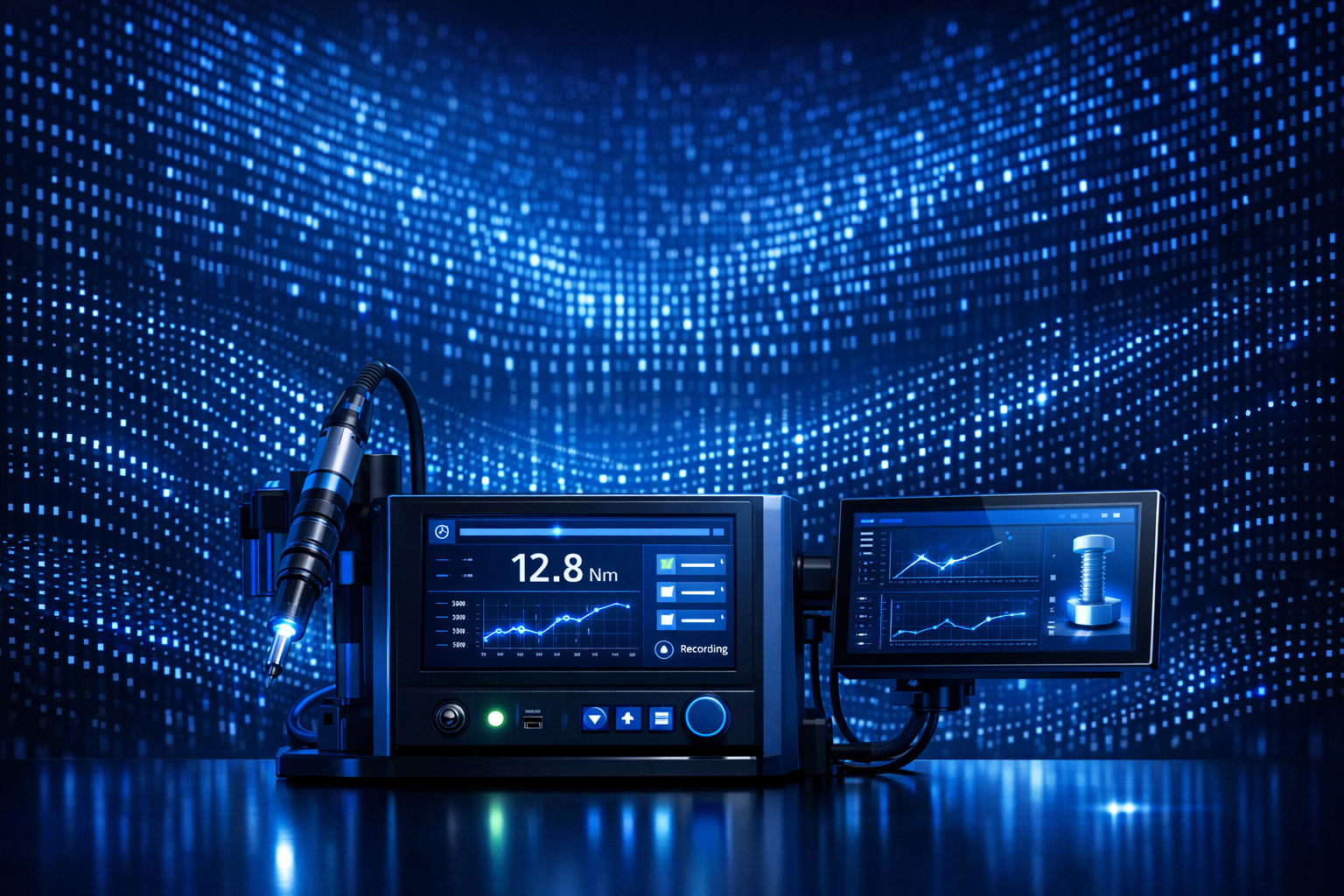
The OPERATOR® production tool is GWK's solution for daily use in Class A assembly processes. It captures torque and angle electronically and directly, evaluates every bolted joint automatically as OK or NOK and transmits all data in real time via Wi-Fi to higher-level systems.
Key features to meet Class A and VDI 2862 requirements:
- Modular interchangeable square-drive system for maximum flexibility with different joint geometries
- Wi-Fi data transfer for seamless integration into MES, ERP and quality management systems
- Open Protocol and PLC interfaces for integration into existing production control systems
- Optional barcode scanner (special accessory) for part identification and full production traceability
- Measurement accuracy ±1% in the range from 10 to 100% of the nominal capacity
The result: documentation is generated as you work - not afterwards, not manually, not with gaps. Your screwdriving process is continuously monitored and your assembly quality assurance is built into the tool.
QUANTEC MCS® - The Analysis Tool for Capability Studies and Process Monitoring
The QUANTEC MCS® analysis tool is GWK's solution for process capability studies (PFU) and in-depth torque analysis of screwdriving processes. With non-fixtured angle measurement and a robust aluminum-titanium design, it delivers the measurement data you need to demonstrate compliance with VDI/VDE 2862 and VDI/VDE 2645.
Key features:
- Non-fixtured angle measurement - no attachment to the component required, ideal for hard-to-reach bolted joints
- Measurement accuracy ±1% between 10 and 100% of the nominal range
- Compatible with QuanLabPro, Ceus and QS-Torque software for complete data evaluation and report generation
- Suitable for machine capability studies (MFU), process capability studies (PFU) to VDI/VDE 2645-3 and audit measurements
The combination of OPERATOR® in production and QUANTEC MCS® for analysis and capability studies closes the loop: complete documentation in everyday production, proven process capability for the audit.
To see how to run a structured process capability study with QUANTEC MCS® in practice, read our guide: Process Capability Study (PFU) According to VDI/VDE 2645-3: Step-by-Step Guide
Q-CHECK® - The QA and Audit Tool
The Q-CHECK® QA and audit tool complements the system for spot checks and audit measurements. With a measuring range from 3-1,000 Nm, accuracy of ±1% between 10 and 100% of the nominal range and internal memory for up to 1,000 bolted joints, it is the ideal tool for quality managers who need to produce quick and mobile audit documentation.
GWK DAkkS-Accredited Calibration Laboratory
All measuring tools must be calibrated regularly. Regular inspection and calibration of measurement and test equipment in accordance with VDI 2646 and 2648 is one of the requirements of the relevant guidelines. GWK operates its own DAkkS-accredited calibration laboratory - both as a stationary lab and as a mobile on-site service to minimize downtime in your production. The DWPM 1000c calibration rig achieves a measurement accuracy of Class 0.2.
For project-based or seasonal requirements, GWK offers calibrated equipment on demand through the GWK ToolRent® rental system - with no capital investment and immediate readiness for use.
Conclusion: Documentation Is Your Insurance Policy
Class A bolted joints are not a niche topic - they are at the heart of product safety in manufacturing. If you tighten according to current standards and guidelines, you are on much safer ground in the event of a claim.
The decisive question is not whether your bolts are tightened correctly. The decisive question is: Can you prove it?
Electronic tools like OPERATOR® and QUANTEC MCS® from GWK turn this into a rhetorical question: documentation is created automatically while you work. Traceability is built into the tool - not an afterthought.
By combining robust torque monitoring, precise angle measurement via angle transducer, reliable torque analysis and comprehensive assembly audit documentation, you establish a screwdriving process that meets the highest expectations for assembly quality assurance, product liability compliance and long-term production traceability.
The other articles in this series explore each aspect in more depth:
- Documentation obligations in tightening processes - What exactly has to be documented and why manual logs fail in an audit
- Liability risk in screwdriving assembly - What courts regard as the "state of the art" and what that means for you
- Manual vs. electronic documentation - A direct comparison and its consequences when things go wrong
- From bolted joint classification to complete documentation - A practical roadmap for quality managers
What is an A-class fastener according to VDI/VDE 2862?
An A-class fastener (Category A according to VDI/VDE 2862) is a safety-critical screw connection whose failure poses a direct risk to life and limb or the environment. Typical examples are steering column fastenings, brake caliper bolts, seat belt attachments or structural connections in aviation. For such connections, the directive applies the highest requirements for tools, documentation and traceability.
Which tools are prescribed for A-class fastenings?
VDI/VDE 2862 does not prescribe any particular brands or models, but defines minimum requirements: The tool must measure electronically (torque AND rotation angle captured directly), trigger an automatic shutdown on a Not OK result, be able to store and transmit all fastener data, and enable component identification. Mechanical torque wrenches do not meet these requirements.
What does 'State of the art' mean in the context of screw assembly?
State of the art refers to the development level of advanced methods and devices that are tested and proven according to general professional knowledge. In the context of screw assembly, VDI/VDE 2862 is regarded as an acknowledged state of the art. Those who demonstrably work according to this guideline — i.e., use electronically measuring tools and document comprehensively — meet the requirements of the Product Liability Act (ProdHaftG) with regard to the safety standard to be maintained.
Is the production manager personally liable for errors in A-class fastenings?
The Product Liability Act (ProdHaftG) is primarily directed at the manufacturing company. In addition, under tort law (Section 823 BGB) personal liability of employees can arise if they culpably violate recognized rules of technology (such as VDI/VDE 2862) and cause damage. The comprehensive documentation according to VDI/VDE 2862 is therefore not only a corporate, but also a personal safeguard for quality managers.
What data must be recorded for an A-class fastener?
For each individual fastener, at least the following data must be captured and stored: torque value, rotation angle, timestamp (date and time), tool ID, operator ID (optional via barcode) as well as component or fastener position number. The result (OK/Not OK) must be automatically evaluated and a lockout signal triggered on Not OK. Manual handwritten logs do not meet these requirements.
Does VDI/VDE 2862 apply only to the automotive industry?
No. VDI/VDE 2862 Part 1 has applied since 1999 to the automotive industry. With Part 2, the guideline was expanded in 2015 to all plant, machinery and apparatus builders. It is today relevant for the entire assembling industry – i.e., also for aerospace, railway technology, medical technology and mechanical engineering.