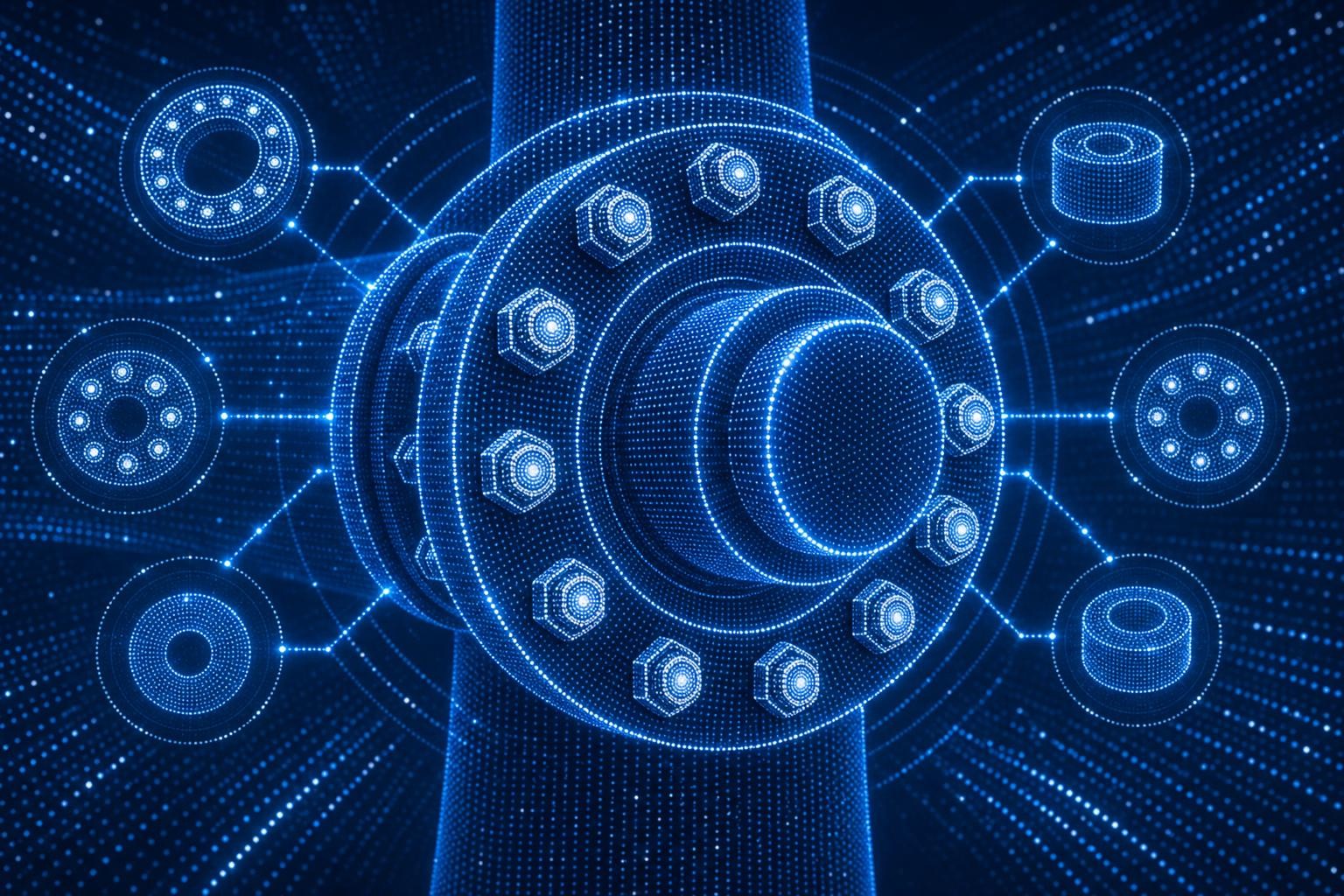

A modern electric vehicle carries a system in its underbody that brings together hundreds of bolted connections - and where a single assembly error can, in the worst case, trigger a fire. Battery pack assembly is therefore not just a question of manufacturing efficiency; it is a core safety engineering task that demands dedicated tools, dedicated processes, and complete documentation.
This pillar article gives you a systematic overview of all relevant fastening cases in the battery pack, explains the normative requirements under VDI/VDE 2862, and shows how you can use GWK tools - QUANTEC MCS®, Q-CHECK®, and OPERATOR® - to meet the standard for every fastening case, from development analysis through to documented series production.
Anatomy of the Battery Pack: Four Fastening Case Groups
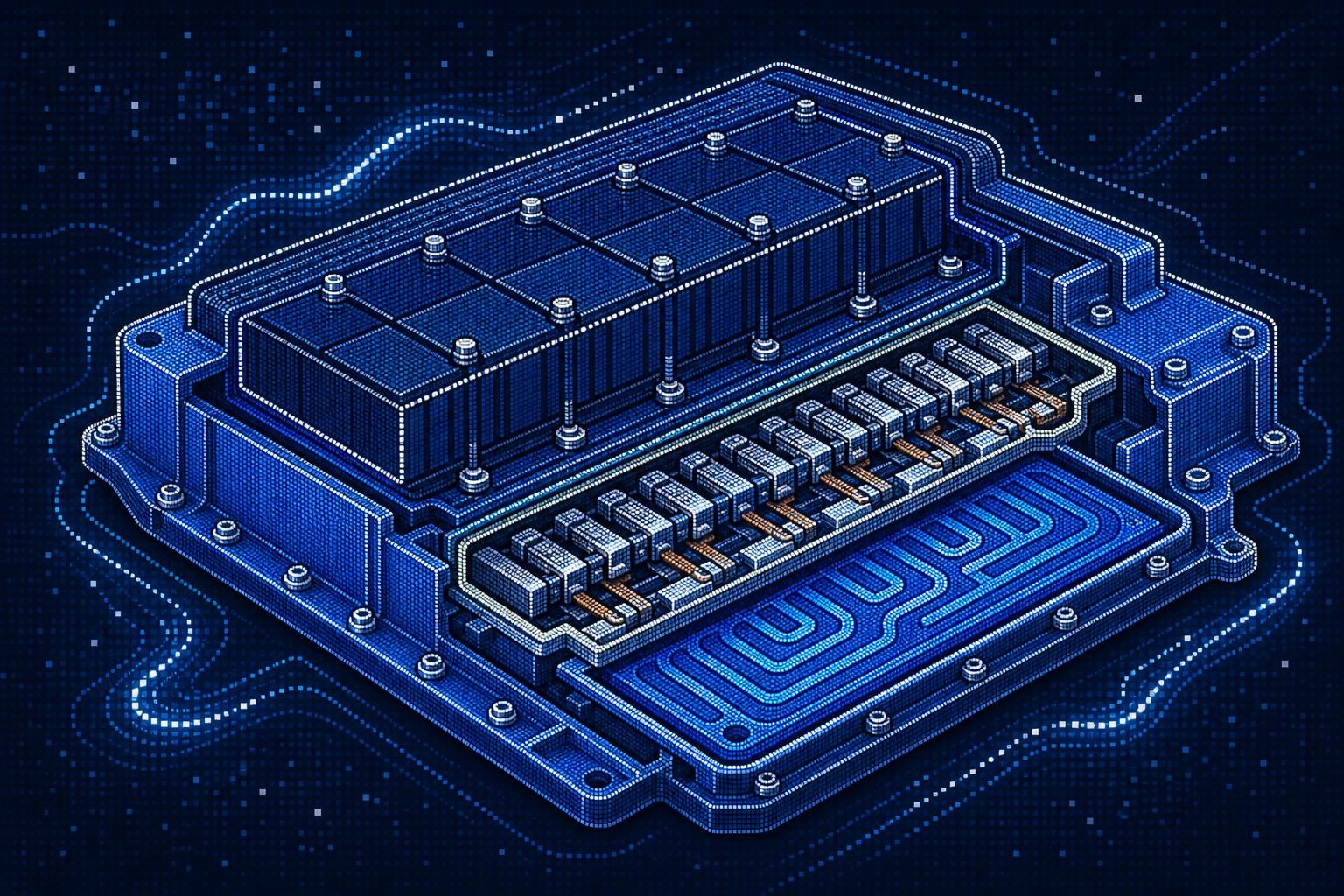
A traction battery pack consists of several assemblies, each placing its own demands on the bolted connections. Depending on the vehicle model, battery packs are assembled with several hundred fasteners that significantly influence performance, range, and service life - and, above all, vehicle safety. Fastening cases can be grouped into four categories:
1. Module and Stack Mounting
The battery modules or cell stacks are secured inside the pack housing. Cooling plates are mounted in the floor of the battery pack tray, after which the battery modules are placed into the pack housing using grippers. The bolted connections must generate a defined preload force that keeps the module securely in place under vibration and thermal cycling - without overloading the sensitive cell housings.
In modern cell-to-pack (CTP) architectures, the module level is eliminated: instead of grouping cells into modules first, they are bolted or bonded directly into the pack housing. This reduces part count but significantly raises the demands on the direct fastening of cell carriers.
2. Housing and Crash Structure Fastening
The pack housing serves a dual function: it protects the cells from mechanical impact and simultaneously acts as a structural component of the vehicle underbody. The design must be engineered for crash safety - impact resistance and shock resistance are central requirements. Fastening the cover, cross-members, and crash structure attachment to the vehicle body therefore ranks among the most safety-critical connections in the entire vehicle.
3. Cell Contacting System (CCS)
The cell contacting system (CCS) electrically interconnects the individual battery cells. The CCS is responsible for the wiring of individual cells within the battery module; depending on vehicle design and OEM requirements, various configurations in parallel or series circuits are possible. The fasteners on cell connectors and current tap-offs carry high-voltage potential - insufficient torque increases contact resistance and generates localized heat, while excessive torque can damage the cell terminals. The tolerance window is narrow.
4. Cooling Plate Fastening
Thermal management in modern battery packs relies on large-area, continuous cooling plates that cover as much cell surface as possible. The cooling plates are fastened with defined torques to ensure uniform heat transfer. Excessive torque can deform the coolant channel geometry and impair coolant flow; insufficient torque compromises the leak-tightness of the cooling circuit.
 AI-generated image
Why High-Voltage Connections Require Their Own Fastening Strategy
Bolted connections in conventional vehicles are demanding - high-voltage connections in the battery pack are demanding in a class of their own. Three risk factors make the difference:
Short circuit from contact loss or leakage current: A loosened cell connector fastener increases contact resistance. Under operating current, localized heat develops, damaging insulation and, in the worst case, initiating an internal short circuit.
Thermal runaway: Thermal runaway is an uncontrolled reaction in lithium-ion batteries in which temperature rises without limit. Damage to the battery or a short circuit can cause heat and pressure to build up; once this reaches a critical level, chemical reactions are triggered that generate even more heat and pressure - a positive feedback loop that can rapidly spread from one cell to the next and lead to catastrophic explosions and fires.
Vibration and settling effects: Electric vehicles are continuously exposed to road vibration. Insufficiently preloaded connections settle, lose preload force, and can come loose during operation. Particularly critical: vibration-induced loosening at high-voltage busbars or module connectors.
High-voltage connections in a battery pack are not standard bolting cases. They require a complete torque-angle analysis, tight tolerance windows, and seamless documentation — regardless of whether the tightening method is torque-controlled or angle-controlled.
Normative Foundation: VDI/VDE 2862 and Class A Fastening
The central standard for bolted assembly in automotive manufacturing is VDI/VDE 2862. It classifies bolted connections into three categories: Category A for safety-critical fastening with risk to life and limb, Category B for function-critical connections, and Category C for non-critical cases.
The objective of the guideline is to provide users with a framework for selecting fastening tools, thereby ensuring safe bolting during automobile production. This is achieved through the unambiguous classification of bolted connections into categories, the definition of minimum requirements for fastening tools for each category, and the definition of minimum requirements for error detection.
For battery pack assembly, this translates into the following:
| Fastening Case | Typical Category | Rationale |
|---|---|---|
| Housing crash structure to body | A | Failure directly endangers occupants |
| High-voltage cell connectors / busbars | A | Risk of short circuit and fire |
| Module mounting in pack | A/B | Vibration loosening -> short circuit |
| Cooling plate fastening | B | Coolant loss -> overheating |
| Housing cover (non-crash-relevant) | B | Leak-tightness requirement |
VDI/VDE 2862 stipulates that suppliers and OEMs must monitor every individual safety-critical bolted connection with the utmost precision and retain the documented data for ten years.
In addition to minimum requirements for assembly tools, VDI/VDE 2862 also mandates an audit of the production process. For Class A fastening, this means: torque and angle of rotation must be measured, evaluated, and archived for every single connection.
The GWK Tool Chain for Battery Pack Assembly
GWK offers the right tool for every step in the process - from development analysis through to documented series production. The three core products work together in a systematic sequence.
QUANTEC MCS®: Fastening Case Analysis with Reaction-Force-Free Angle Measurement
Before a fastening case goes into series production, it must be fully understood. The QUANTEC MCS® analysis tool delivers the complete torque-angle characteristic of a connection - without a reaction point, directly at the component.
The reaction-force-free angle measurement is critical here: in the battery pack, many connections are accessible only in confined installation situations where an external reference point is often not feasible. The QUANTEC MCS® measures the angle of rotation directly at the tool and still delivers precise results with an accuracy of ±1% between 10 and 100% of the nominal range.
Fastening case analyses provide the opportunity to determine parameters alongside series production, monitor processes, and identify scatter, trends, and deviations at an early stage. For battery pack assembly, the QUANTEC MCS® analysis specifically delivers:
- The complete torque-angle curve for every fastening case
- Detection of settling effects and plastic deformation
- Derivation of the optimal tightening method (torque-controlled or angle-controlled)
- Verification of the achievable preload force and the actual torque at the connection
The robust aluminum-titanium construction of the QUANTEC MCS® is no coincidence: battery pack assembly often involves harsh conditions - coolant splatter, temperature fluctuations, intensive use. Titanium tubes instead of carbon ensure long-term accuracy even under these conditions.
Q-CHECK®: QA and Audit Tool for Residual Torque Measurement
Once a fastening case has been engineered, the process must be continuously monitored. The Q-CHECK® is the QA and audit tool for exactly this task: it measures the residual torque on already-tightened connections, enabling process capability studies (PCS) in accordance with VDI/VDE 2645-3.
In the context of battery pack assembly, this means: on a sample basis or at defined intervals, completed battery packs are checked to verify that the connections have actually reached the specified tightening torque. With a measurement range of 3 to 1,000 Nm and an accuracy of ±1% between 10 and 100% of the nominal range, the Q-CHECK® covers the full spectrum of battery pack assembly - from the small cell connector fastener to the large housing crash structure connection.
The internal 2 GB memory enables complete documentation of all measured values - a direct response to the archiving obligation under VDI/VDE 2862.
OPERATOR®: Documented Series Assembly with the Interchangeable Square Drive System
In series production, the OPERATOR® takes center stage. The modular production tool with its interchangeable square drive system is designed for continuous operation on the assembly line: individual components can be replaced without having to swap out the entire tool - a decisive advantage in high-volume manufacturing.
WLAN data transmission ensures that every fastening operation is documented in real time. The OPERATOR® EST01 with PLC communication and Open Protocol enables direct integration with higher-level production systems (MES, QA databases) - and with it the complete traceability that VDI/VDE 2862 requires for Class A connections.
The interchangeable square drive system also offers a practical advantage in battery pack assembly: different fastening cases in the battery pack require different socket inserts. Fast changeovers without a full tool swap save time and reduce the risk of mix-ups.
Calibration: The DWPM Calibration Machine in the DAkkS-Accredited Laboratory
All three tools are only as good as their calibration. GWK operates its own DAkkS-accredited calibration laboratory with the DWPM calibration machine of accuracy class 0.2 - the reference standard for calibrating torque and angle wrenches.
Class 0.2 means: the measurement uncertainty of the calibration machine is a maximum of 0.2% of the measured value. This ensures that the calibrated tools can actually maintain the required tolerances for Class A fastening under VDI/VDE 2862.
For production sites that cannot or prefer not to ship tools off-site, GWK additionally offers a mobile on-site calibration service - minimal downtime, maximum availability.
Flexible Entry Point: GWK ToolRent®
Not every battery pack assembly line needs the full tool portfolio right away. For development projects, production ramp-up phases, or temporary capacity expansions, GWK ToolRent® provides calibrated tools on demand - available by the week, month, or year, with worldwide shipping.
This means you can start the QUANTEC MCS® analysis for a new battery pack project without committing to a purchase upfront. All rental units are delivered calibrated and are ready for immediate use.
Process Assurance from Start to Finish
The following overview shows how GWK tools cover the entire lifecycle of a battery pack assembly connection:
Conclusion: No Battery Pack Without a Comprehensive Fastening Strategy
Countless battery packs are assembled with several hundred fasteners per unit depending on the model - and when individual components fail during operation, the risk to human life and the environment is real. A comprehensive fastening strategy is therefore not optional; it is a requirement.
The framework is clear: classify fastening cases, analyze the torque-angle characteristic, secure the series process, demonstrate audit capability, and document calibration without gaps. With QUANTEC MCS®, Q-CHECK®, and OPERATOR® - calibrated via the DWPM calibration machine in the DAkkS-accredited laboratory - you have the right tool for every step. Accuracy by GWK.